
Curiosity Safaris
Safari Retreats
Kenya Chasing Butterflies Expedition
Lepsoc Africa
From
$12000
Group Size
8 Guests
Duration
14 Days
Safari Date
October 2027
Location
Various locations across Kenya
Overview
This 14-day Butterfly Expedition through Kenya is a specialised, field-focused journey designed for serious naturalists, photographers, and conservation enthusiasts interested in documenting East Africa’s extraordinary Lepidoptera diversity. The route has been carefully structured to move through four distinct ecological zones — urban forest fragments, coastal rainforest and mangroves, Afro-montane highlands, dry valley systems, and equatorial rainforest — creating one of the most complete butterfly transects possible in a single country.
The expedition begins in Nairobi, using the city’s forest reserves such as Karura as a gentle introduction to field methods. These early days allow participants to calibrate identification skills, refine data collection techniques, and become familiar with equipment before moving into more remote habitats. This phase ensures strong scientific consistency across the journey while still offering access to surprisingly rich urban biodiversity.
From Nairobi, the route descends to Kenya’s coast, centred around the Arabuko Sokoke Forest and nearby Mida Creek. This region is one of Africa’s most important butterfly strongholds, combining coastal forest endemics, mangrove specialists, and species adapted to tidal ecosystems. Visits to community butterfly farming projects add a conservation and cultural dimension, highlighting how local livelihoods and biodiversity are closely linked.
The journey then transitions inland to the Mount Kenya region, where altitude becomes the defining ecological driver. Here, participants move through lower montane forest into high-altitude heath and bamboo zones, encountering specialised mountain species adapted to cooler temperatures and unique flora. This section of the expedition provides a clear demonstration of how elevation shapes butterfly distribution and diversity.
Next, the expedition travels to the Kerio Valley, a dramatic rift system where dry woodland, riverine forest, and savannah habitats converge. This transitional zone introduces a different assemblage of species, particularly those adapted to heat, aridity, and isolated riparian corridors.
The final and most intensive stage takes place in Kakamega Forest, Kenya’s only true equatorial rainforest remnant. Here, dense canopy, constant humidity, and complex vegetation structure create peak butterfly diversity. Multiple days of structured transects, canopy-edge sampling, and optional nocturnal light trapping allow for deep biodiversity recording and rare species encounters.
Across all regions, the expedition is designed around early-morning and late-afternoon fieldwork, when butterfly activity is highest. Midday periods are dedicated to specimen processing, identification, and data consolidation. The result is a scientifically grounded, immersive exploration of Kenya’s butterfly fauna across its most important ecological systems.
Curiosity Safari Guide
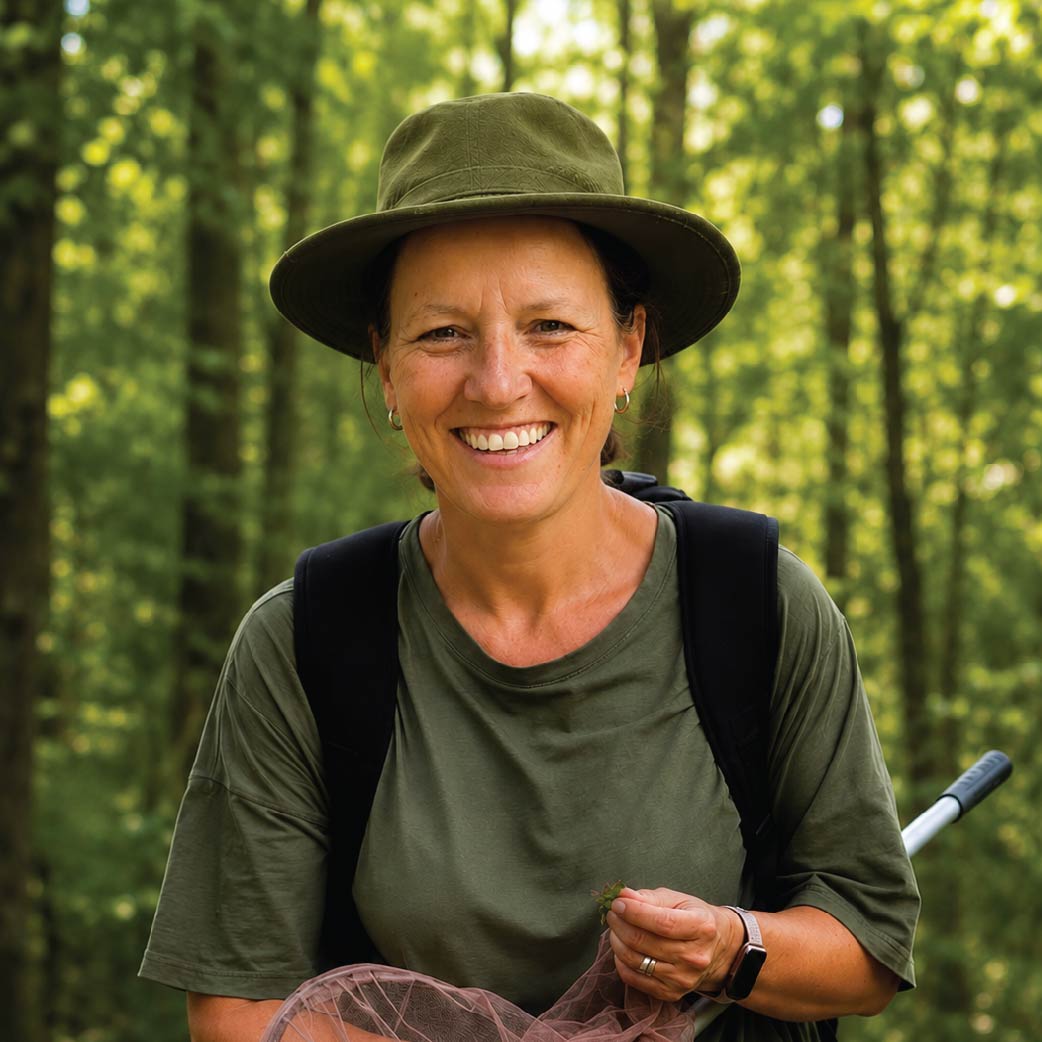
Lynn Katsoulis serves as Chair of the executive council of LepSoc Africa. She has also held the role of Highveld branch chair for the organisation. Lynn has led conservation-oriented initiatives, including “Bring the Butterflies Back” focused on habitat restoration through indigenous planting. Her work experience centres on environmental stewardship, community engagement and citizen science. Her passions lie in protecting butterflies and moths, restoring disturbed natural habitats and inspiring others to connect with nature through practical conservation.
Itinerary
Day 1 – Arrival in Nairobi & Initial Field Setup
- Arrive in Nairobi and transfer to your base at Kwetu Nairobi, Curio Collection or a similar Gigiri-area lodge.
- Settle in and begin acclimatisation with a short reconnaissance walk in Karura Forest.
- Test field equipment including nets, cameras, and recording sheets in a low-pressure environment.
- Enjoy an evening briefing covering expedition goals, butterfly habitats, and identification basics.
Day 2 – Urban Forest Transects & Species Calibration
- Begin pre-dawn butterfly transects in Karura Arboretum and surrounding forest patches.
- Record early urban and woodland species to calibrate field identification techniques.
- Refine data collection methods and review butterfly field guides.
- Spend the afternoon preparing equipment and discussing target species for coastal regions.
Day 3 – Travel to the Kenyan Coast & Coastal Orientation
- Travel by road or domestic flight to the Watamu/Malindi region near Arabuko Sokoke Forest.
- Check into a coastal base such as Temple Point or Mida Creek eco-lodge.
- Conduct an introductory walk along forest edge habitats to observe early coastal species.
- End the day with a briefing on mangrove, forest, and tidal butterfly systems.
Day 4 – Arabuko Sokoke Forest Exploration
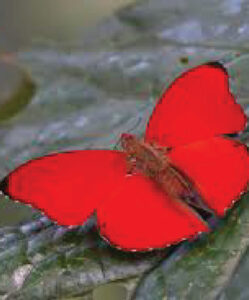
- Begin early morning transects inside Arabuko Sokoke Forest targeting coastal endemic species.
- Survey forest clearings, canopy gaps, and understory microhabitats.
- Conduct afternoon visits to edge habitats for additional species diversity.
- Review sightings and photography data during evening identification sessions.
Day 5 – Mida Creek & Community Butterfly Projects
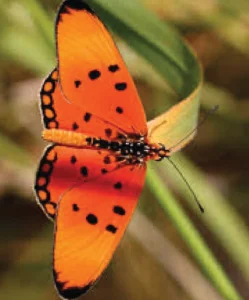
- Explore mangrove ecosystems and tidal zones at Mida Creek during tide-aligned fieldwork.
- Observe species adapted to coastal scrub and mangrove edge habitats.
- Visit local butterfly farming and conservation initiatives near Gede.
- Return to camp for specimen review and ecological discussion.
Day 6 – Travel to Mount Kenya Lower Slopes
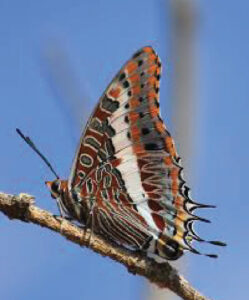
- Travel to the Mount Kenya region and check into a lodge such as Fairmont Mount Kenya Safari Club.
- Begin afternoon surveys in lower montane forest zones.
- Focus on sunlit clearings and Afro-montane butterfly communities.
- Evening briefing on altitude transitions and mountain ecology.
Day 7 – High Altitude Butterfly Transects
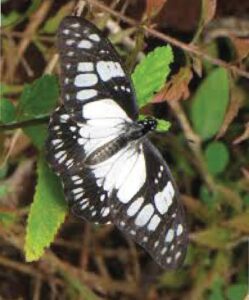
- Conduct early morning transects on higher elevation Mount Kenya trails.
- Target alpine and montane specialist butterfly species.
- Observe vegetation transitions from bamboo to heath and giant lobelia zones.
- Return to lodge for specimen processing and photographic documentation.
Day 8 – Extended Mountain Survey & Data Work
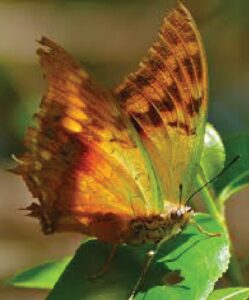
- Continue targeted transects in under-sampled areas of Mount Kenya.
- Focus on behavioural observations and habitat associations.
- Dedicate midday hours to specimen identification and data consolidation.
- Enjoy a relaxed evening reviewing species lists and photographic records.
Day 9 – Travel to Kerio Valley
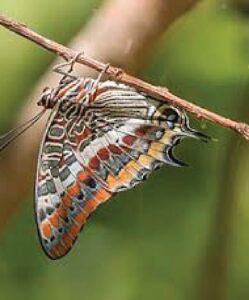
- Depart Mount Kenya and travel toward Kerio Valley via scenic highland routes.
- Arrive at a riverine lodge and settle into the valley environment.
- Conduct late-afternoon reconnaissance along riparian forest strips.
- Observe early dry-forest butterfly assemblages before sunset.
Day 10 – Kerio Valley Riverine & Dry Forest Transects
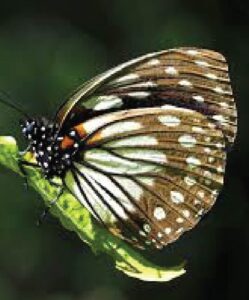
- Explore riverine corridors and gallery forests for specialised butterfly species.
- Conduct structured transects across microclimates and vegetation gradients.
- Work with local guides familiar with seasonal flowering and species hotspots.
- Record sightings and prepare for rainforest transition.
Day 11 – Travel to Kakamega Forest
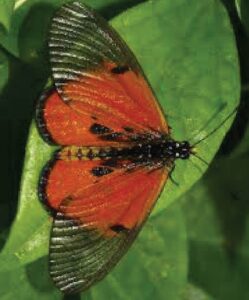
- Travel northwest to Kakamega Forest, Kenya’s only equatorial rainforest remnant.
- Check into Rondo Retreat Centre or nearby forest lodge.
- Conduct initial afternoon forest edge survey upon arrival.
- Prepare equipment for intensive rainforest butterfly work.
Day 12 – Kakamega Rainforest Intensive Surveys
- Begin early morning transects in primary rainforest habitats.
- Focus on canopy gaps, stream edges, and dense understory zones.
- Conduct guided surveys with local rangers in less-visited areas.
- Evening moth-lighting session (permit dependent) for nocturnal species.
Day 13 – Final Kakamega Field Day
- Complete final targeted butterfly transects across key rainforest habitats.
- Revisit high-diversity zones for missed or rare species.
- Consolidate field data and final photographic documentation.
- Prepare full expedition datasets and specimen organisation.
Day 14 – Return to Nairobi & Expedition Close
- Travel back to Nairobi via road or regional flight connections.
- Finalise species lists, field notes, and photographic records.
- Conduct final review and equipment breakdown.
- Depart Nairobi with completed butterfly expedition findings and datasets.
Disclaimer
Please note that as these retreats and expeditions take place in nature, and nature is often unpredictable we cannot guarantee weather and wildlife viewings. Adaptations to itineraries may need to be made to ensure that we can provide the best possible experience for you. In the event of unforeseen circumstances and emergencies facilitators or guides may be substituted. Departures are not guaranteed as a minimum amount of guests are required for retreats to take place. Retreats and wellness experiences are not psychological or medical treatment.
Follow the Adventures
Respond to every call that excites your spirit Rumi

Lala Palm Safari Co.
malvina@lalapalmsafari.comSubscribe to our Newsletter
A little wilderness in your inbox - safari news, inspiration, and exclusive updates.